How to Knit a DragonTail Shawl [Free Knitting Pattern & Video Tutorials]
***You can purchase an INEXPENSIVE AD-FREE PDF of this pattern HERE***
[Alternatively, keep scrolling for the free version of the pattern]
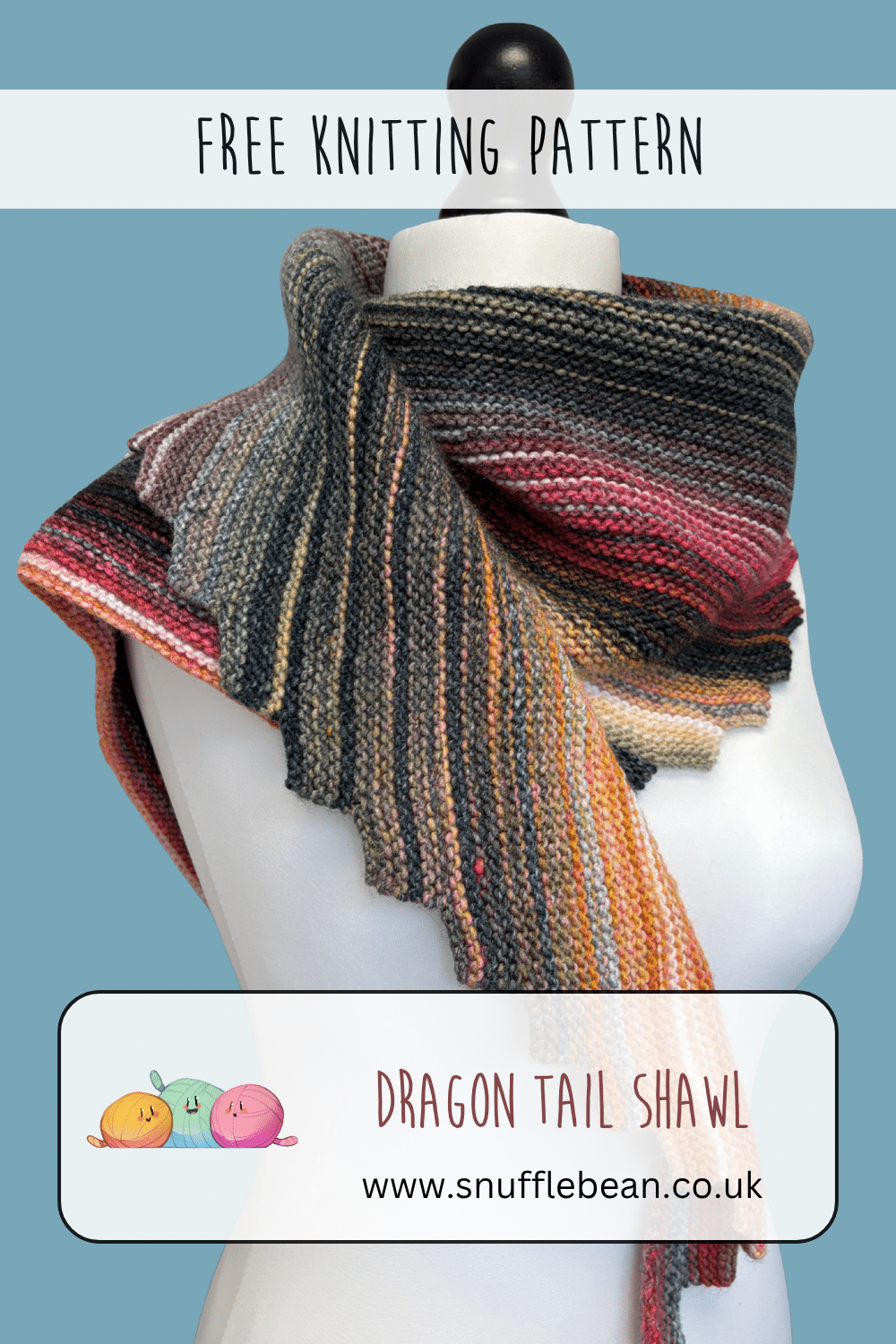
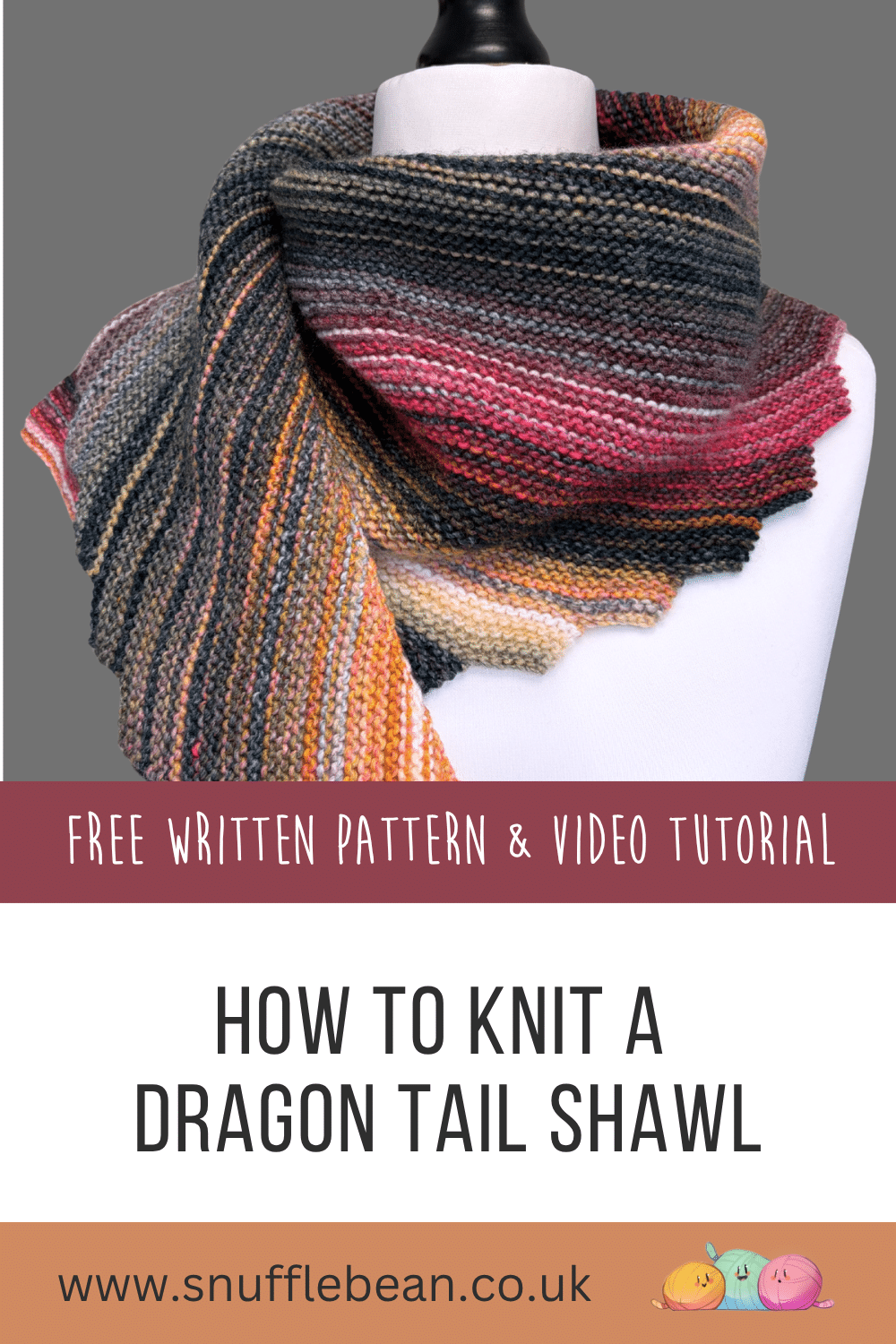
This Dragon Tail shawl pattern is a twist on the classic asymmetrical shawl. The basic construction of both designs gives the shawl an asymetrical trianglar shape, but by casting off a set amount of stitches every 10 rows in this shawl, you create the distinctive points that give one edge of that triangle an extra element of interest.
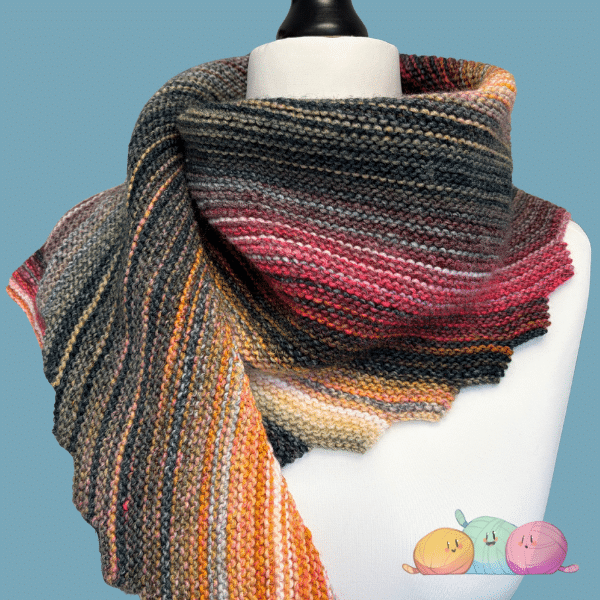
This shawl is perfect for beginner knitters as it only involves knowing 3 very simple techniques alongside your trusty knit stitch. Although I haven’t filmed a standalone video for this shawl, I have beginner friendly tutorials that cover all these techniques that you can refer to if you get a little stuck along the way.
pin for later
Not ready to knit this project just yet? Why not pin this image to your Pinterest so you can find it easily when you’re ready to sit down and cast on!
Sizing tips and tricks
This shawl can be knitted in any weight yarn you like, you will just end up with a thicker, or airier shawl depending on whether you choose a heavier or lighter yarn.
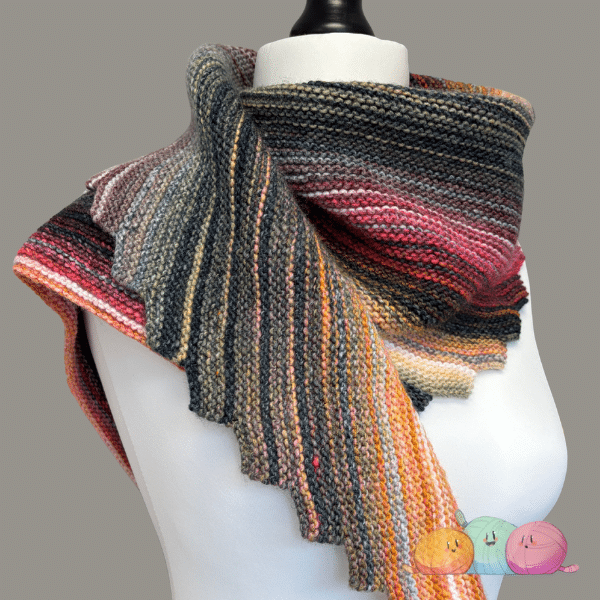
Ideally for an adult sized shawl you want to knit until the shawl measures 180cm (70 inches) along its longest edge, but don’t let that stop you from knitting a bigger version if you really want to be snuggly when wearing it.
Materials Needed
- 150-300g (Size Dependent) of James C Brett Emotions DK (I used the shade Interest).
- 4mm (US Size 6) knitting needle (Ideally 120cm circular, but straight needles can also be used).
- Large Eye Tapestry Needle.
- Embroidery Scissors.
Stitches Used
- k – Knit
- kfb – Knit front back increase
- WS – Wrong Side
- RS – Right Side
written pattern
Setup Rows
Cast on 3 Stitches. (I like to use the Long Tail method)
Row 1 (RS): kfb, k2 (4 stitches)
Row 2 (WS): k until 1 stitch remains in the row, kfb (5 stitches)
Row 3: kfb, k to end of row. (6 stitches)
Row 4: k until 1 stitch remains in the row, kfb. (7 stitches)
Row 5: kfb, k to end of row. (8 stitches)
Row 6: k until 1 stitch remains in the row, kfb. (9 stitches)
Row 7: kfb, k to end of row. (10 stitches)
Row 8: k until 1 stitch remains in the row, kfb. (11 stitches)
Row 9: kfb, k to end of row. (12 stitches)
Row 10: k until 1 stitch remains in the row, kfb. (13 stitches)
Row 11: kfb, k to end of row. (14 stitches)
Row 12 (WS): Cast off 6 stitches knitwise, k until 1 stitch remains in the row, kfb. (9 stitches)
Main Pattern Repeat:
Row 1 (RS): kfb, kto end of row.
Row 2 (WS): k until 1 stitch remains in the row, kfb
Row 3: kfb, k to end of row.
Row 4: k until 1 stitch remains in the row, kfb
Row 5: kfb, k to end of row.
Row 6: k until 1 stitch remains in the row, kfb
Row 7: kfb, k to end of row.
Row 8: k until 1 stitch remains in the row, kfb
Row 9: kfb, k to end of row.
Row 10: Cast off 6 stitches, k until 1 stitch remains in the row, kfb.
Repeat Rows 1-10 until the the longer straight edge measures approximately 180cm long. Then, instead of casting off only 6 stitches, cast off all stitches during a Row 10 repeat.
useful video tutorials
I don’t have a stand alone tutorial for this shawl, but all the techniques covered in these patterns have their own Video Tutorial. I’ve linked them all below in case you need help whilst knitting.
![How to Knit Beaded Rib Stitch [Free Written Pattern & Video Tutorial!]](https://www.snufflebean.co.uk/wp-content/uploads/2024/07/Beaded-Rib-Front-WordPress.jpg)
![How to Knit the “Casper” Baby Blanket [Free Video Tutorial & Written Pattern!]](https://www.snufflebean.co.uk/wp-content/uploads/2023/05/casper-social.png)
![Easy Knit Diagonal Garter Stitch Scarf 🧶🧣 [Free Written Pattern & Video Tutorial!]](https://www.snufflebean.co.uk/wp-content/uploads/2023/01/diagonal-scarf-social.png)
![How to Knit Double Fleck Stitch [Free Video Tutorial & Written Pattern!]](https://www.snufflebean.co.uk/wp-content/uploads/2023/11/Double-Fleck-Social.jpg)
![How to Knit the “Holly” Baby Blanket [Free Video Tutorial & Written Pattern!]](https://www.snufflebean.co.uk/wp-content/uploads/2024/01/Holly-Social.png)